
Rising from the Ashes
Rebuilding Lahaina and the Challenge of Commercial Recovery After Catastrophic Disasters
March 5, 2026
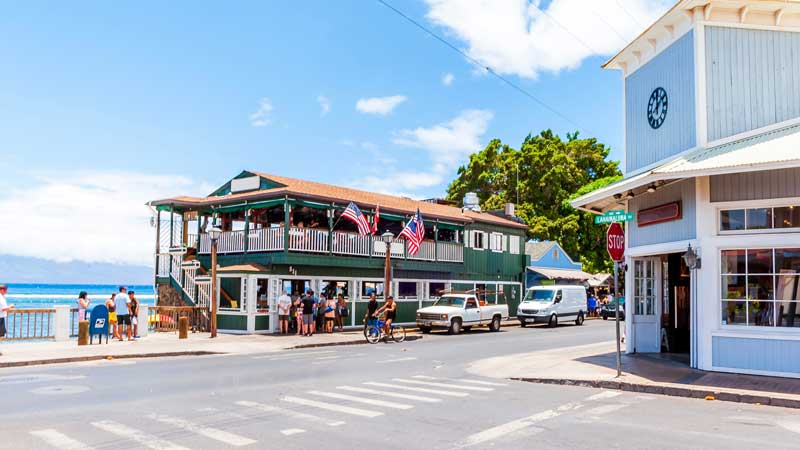
In the weeks after the fire, what struck many people about Lahaina was the silence. Anyone who has ever walked along Front Street in the evening knows how unusual that felt. Not too long ago, the area was filled with restaurant chatter, music from open doors, and visitors drifting from gallery to gallery as the sun set over the harbor. After the 2023 Lahaina wildfire, all of that disappeared overnight.
More than two thousand structures were lost. The human loss was devastating. The fire also destroyed something else: the economic heart of the region. Lahaina was not simply another Maui town; it was the commercial center of West Maui. Within a few compact blocks, restaurants, small retail shops, art galleries, and harbor businesses formed an ecosystem that, according to the University of Hawaiʻi Economic Research Organization, supported over 8,500 jobs. Visitors could spend an entire evening along the waterfront without ever leaving Front Street. When the fire swept through the town, that network vanished in a matter of hours.
Rebuilding homes after a wildfire is difficult. Rebuilding an entire commercial district is a different challenge altogether.
You can see the contrast by looking at other wildfire disasters. In Santa Rosa, the Tubbs Fire destroyed thousands of homes. Entire neighborhoods disappeared. Yet the city itself continued functioning. Businesses outside the burned areas remained open, roads and infrastructure stayed intact, and the regional economy kept moving. People could rebuild their homes while still relying on the rest of the city.
Coastal Southern California provides another comparison. Fires affecting Malibu and Pacific Palisades, including the Woolsey Fire and the more recent Palisades Fire, destroyed thousands of structures as well. But those communities sit inside the enormous economic engine of Los Angeles. Contractors, engineers, architects and financing are all close at hand. Reconstruction can start quickly because the surrounding economy has the capacity to absorb the shock.
Local government responses matter too. After the fires affecting Pacific Palisades and Malibu, officials moved quickly to simplify parts of the permitting process so that the regulatory system would not slow reconstruction. Entire neighborhoods had been destroyed, and thousands of families and businesses were waiting to rebuild. Some reviews were consolidated, timelines shortened, and unnecessary steps temporarily removed. Emergency measures adopted by Malibu allowed homeowners and businesses to rebuild structures damaged or destroyed by fire without going through lengthy discretionary reviews if the replacement buildings were similar in size and use. Support for speeding the process also came from leadership in Los Angeles, where the mayor directed city departments to prioritize rebuilding permits in fire-affected areas. Environmental protections still applied — California’s Coastal Act and Coastal Commission review were still there — but officials made it clear that the regulatory system should not become the main barrier to rebuilding. The guiding principle was simple: when a community is trying to recover from disaster, the permitting system should help reconstruction move forward rather than slow it down.
On Maui, things work differently.
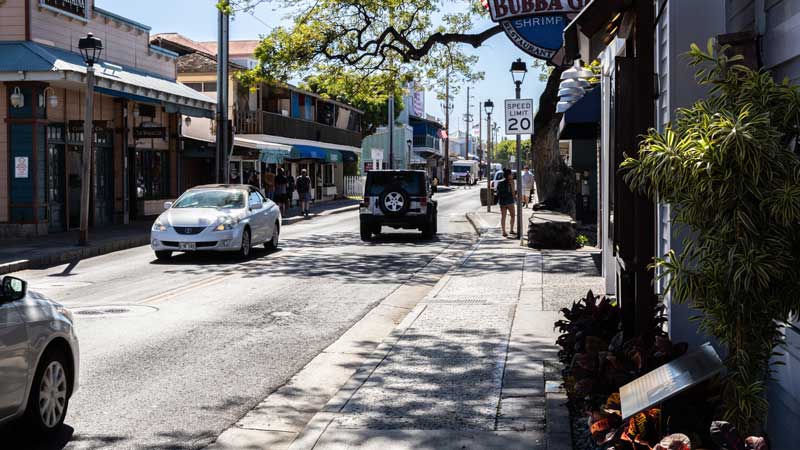
Even before the Lahaina fire, the county’s permitting process had a reputation for being slow and complicated. Anyone who has attempted to build or renovate property on the island is familiar with the experience. A project often moves through multiple departments — planning, public works, environmental management, building permits, sometimes cultural review — and each step has its own procedures and timelines. None of these regulations exist without reason. Maui’s environment is fragile, and Lahaina itself is part of the Lahaina Historic District, one of the most historically significant places in the islands. Protecting that history matters.
But the reality is that the system can be painfully slow, even in ordinary times. When an entire commercial district needs to rebuild at once, the delays become much more consequential.
Commercial districts depend on momentum. Restaurants, galleries and shops thrive when they open together and generate foot traffic for one another. If rebuilding happens slowly — one storefront here, another a year later — it becomes much harder to recreate the lively atmosphere that once defined Front Street.
After Hurricane Katrina, parts of New Orleans faced a similar problem. In neighborhoods such as the Lower Ninth Ward, businesses struggled to reopen because the surrounding blocks remained largely empty for years. Nearly a decade after the storm, the area's first grocery store opened only because one determined resident invested his entire life savings to make it happen — and it eventually closed anyway, unable to survive in a district that never fully came back. Twenty years after the storm, the area still lacked basic commercial services — a reminder that rebuilding a commercial district requires more than reconstructing individual buildings.
The conversation about Lahaina’s future is also being shaped by strong community voices. Groups such as Lahaina Strong emerged after the fire to advocate for residents and to guard against speculative redevelopment. Many families understandably want to ensure that Lahaina does not lose its cultural identity or become dominated by outside investors. At the same time, these debates have created tension within the community. Some displaced workers and business owners worry that prolonged political battles could slow the return of jobs and economic activity.
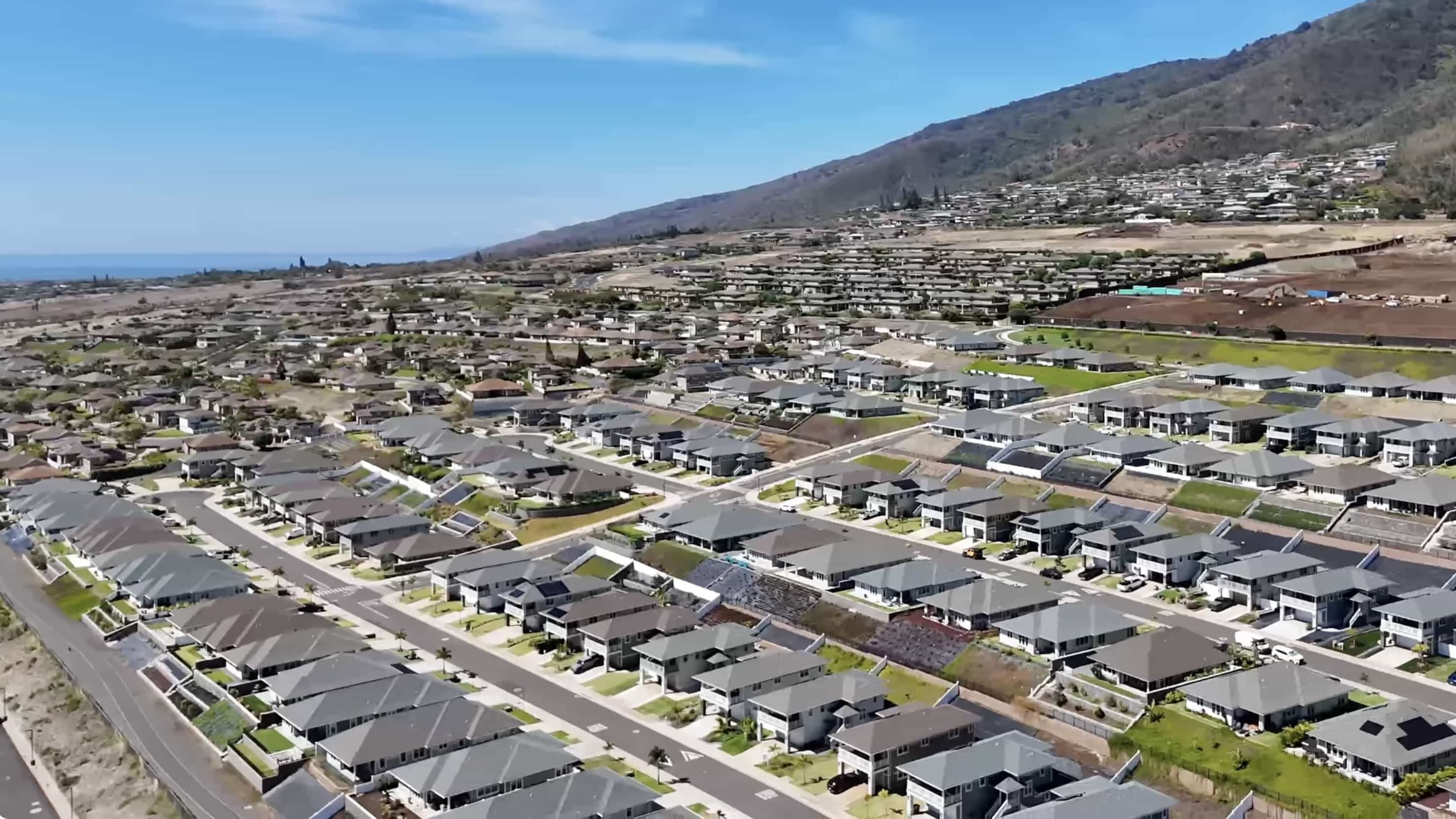
Meanwhile, the practical obstacles to rebuilding remain significant. The fire damaged critical infrastructure, including water and electrical systems, and rebuilding cannot move forward at scale until those systems are restored. Maui also faces a challenge mainland communities do not: geography. Building materials, heavy equipment and specialized labor must arrive by ship or air, which inevitably slows construction.
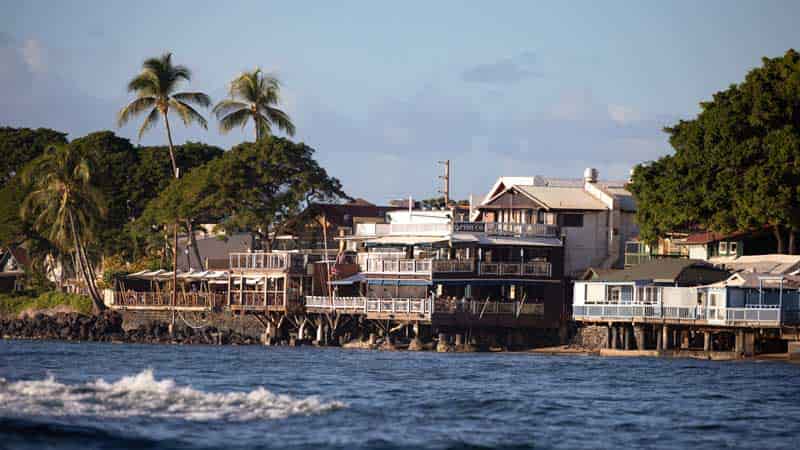
In the meantime, Maui’s visitor economy has quietly shifted. Some of the activity that once centered on Lahaina has moved toward nearby resort areas. Restaurants and retail districts elsewhere on the island have absorbed part of the displaced spending. But those changes are temporary. Lahaina’s waterfront district once played a role that no other place on Maui quite replicates.
In the end, Lahaina’s recovery will not be measured simply by how many buildings rise again. The real test will be whether the town can restore the commercial life that once filled its streets — the mix of visitors and residents, the evening crowds along the harbor, the easy flow from restaurant to gallery to shop.
Communities destroyed by wildfire often take years to recover. Paradise, California, devastated by the Camp Fire, is still rebuilding years later. Lahaina may face a similarly long road.
But Lahaina also has something powerful on its side: a deep sense of place. Its harbor, its history and its role in Maui’s cultural life give it an identity that cannot easily be replaced. If Maui can find a way to preserve that character while also clearing a realistic path for businesses to rebuild, the town’s commercial life will eventually return.
The question is not whether Lahaina will come back, but how long we will make it take.
Explore the Coastline of Distinction
Discover Maui’s most exceptional properties, from Kapalua’s ridge-line sanctuaries to Kaanapali’s oceanfront retreats.
MARY ANNE FITCH
REALTOR® · RB-15747 · SENIOR PARTNER
GLOBAL LUXURY SPECIALIST
